
Energy Storage Market Insights
PHMSA Updates Lithium Battery Transport Rules: Why After-Sales Logistics Matters
As battery deployments expand in the U.S. market, evolving lithium battery transportation requirements are creating new considerations for warranty, replacement, and service-related activities.
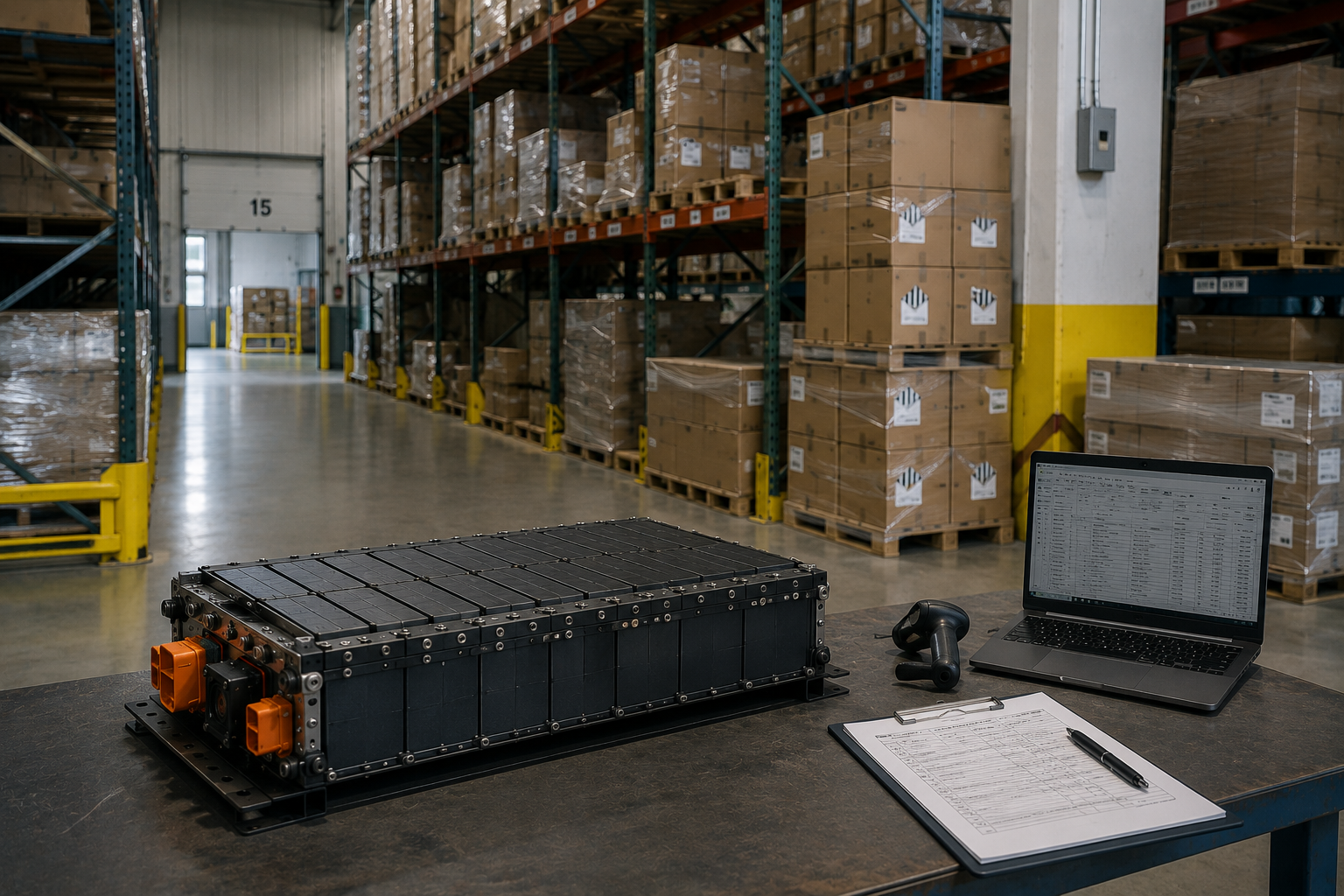
As battery deployments expand across the U.S. market, companies are facing new challenges in managing warranty returns, replacement batteries, and service-related shipments. Unlike standard products, lithium batteries require additional evaluation of battery condition, handling requirements, and transportation compliance throughout service activities.
On August 4, 2026, PHMSA published a final rule expanding the quantity limits for lithium batteries transported under qualifying Materials of Trade (MOT) conditions. The rule takes effect on September 3, 2026, and provides additional flexibility for certain eligible service, maintenance, and field-support activities.
01. AFTER-SALES BATTERY TRANSPORT IS BECOMING MORE COMPLEX
As battery deployments increase in the U.S. market, companies are seeing more post-delivery battery movements, including: Warranty replacement shipments; Service-related battery transportation; Damaged battery handling; Field support activities.
Unlike standard products, lithium batteries require additional evaluation after return, as battery condition, safety status, and transportation requirements can affect how products are handled during service activities.
Companies need clear processes to assess battery status, determine appropriate handling methods, and ensure compliance throughout the service process.
02. PHMSA RULE UPDATES CREATE NEW CONSIDERATIONS FOR AFTER-SALES BATTERY TRANSPORT
The updated PHMSA rule expands the quantity limits for certain lithium batteries transported under the Materials of Trade (MOT) exception, which provides specific transportation allowances for materials carried by businesses in direct support of their trade, business, or service activities.
For lithium batteries transported under qualifying Materials of Trade conditions, the updated rule allows:
- Individual lithium cells or batteries, except when contained in equipment, up to 30 kg (66 lb) net weight per cell or battery
- Up to 500 kg (1,102 lb) aggregate net weight of applicable lithium batteries per motor vehicle
These changes may be particularly relevant for certain service, maintenance, and field-support activities. However, the updated limits apply only to qualifying Materials of Trade activities and do not represent a general change to all lithium battery transportation requirements.
Companies still need to evaluate each battery movement based on: Transportation purpose; Battery condition; Packaging and securing requirements; Applicable safety requirements.
Lithium batteries transported under these provisions must also continue to meet applicable requirements, including relevant UN 38.3 testing and measures to prevent short circuits, movement-related damage, and accidental activation during transportation. Understanding these changes helps companies better evaluate transportation options for warranty replacements, service activities, and other qualifying after-sales battery operations.
03. BATTERY SERVICE OPERATIONS REQUIRE LOCAL HANDLING CAPABILITIES
While updated transportation rules may provide more flexibility for certain scenarios, companies still need proper battery handling processes.
When batteries are returned for warranty, replacement, or service purposes, companies need to evaluate product condition and determine whether products can be repaired, reused, redistributed, or require additional handling.
A typical battery service process may include:
The appropriate handling approach depends on: Product condition; Battery status; Safety requirements; Final disposition plans.
Without reliable local handling and service capabilities, companies may face longer turnaround times, higher costs, and limited visibility into product lifecycle management. Establishing U.S. battery service and return capabilities helps energy companies improve after-sales support and manage products more effectively after deployment.
04. BUILDING U.S. AFTER-SALES CAPABILITIES BEFORE SCALING SALES
As battery deployments increase, companies need more than product delivery capabilities. They also need reliable U.S. support to manage warranty, replacement, and service-related requirements after deployment.
Before expanding U.S. sales, companies should evaluate their after-sales logistics strategy, including return handling, battery assessment, and local service capabilities.
Establishing reliable U.S. after-sales operations helps companies improve service response times, maintain product value, and support long-term customer relationships.
Companies that connect transportation, warehousing, and lifecycle management with local operational support will be better positioned to scale their U.S. market presence.
SUPPORTING U.S. BATTERY SERVICE OPERATIONS
For global battery and energy companies entering the U.S. market, reliable local service operations are becoming increasingly important.
Vast Ocean Corp supports energy companies through:
- Warranty return coordination
- Battery product inspection support
- Battery product handling and storage support
- Repackaging and labeling support
- U.S. warehousing and inventory management
- Transportation coordination
VOC helps companies build reliable U.S. operational support based on:
- Product category
- Service requirements
- Inventory needs
- Distribution strategy
- Service timeline
Whether managing warranty returns, replacement batteries, or service-related shipments, VOC helps energy companies improve operational efficiency and build reliable U.S. battery service and lifecycle support.
Contact VOC →Data Sources & Disclaimer
The information in this article is based on publicly available regulatory updates, industry research, and supply chain insights for educational and industry discussion purposes.
Key references include:
- Federal Register
- 49 CFR § 173.6 – Materials of Trade Requirements
- Pipeline and Hazardous Materials Safety Administration (PHMSA)
The updated PHMSA requirements apply only to qualifying transportation scenarios under applicable regulations. Transportation requirements may vary depending on battery type, shipment purpose, packaging method, and operational conditions.