
Freight & Distribution
LTL Delivery Requirements: Is Your Receiving Site Ready?
A commercial address may have no dock, forklift, or suitable truck access. Matching the delivery service to actual receiving conditions helps prevent avoidable delays.
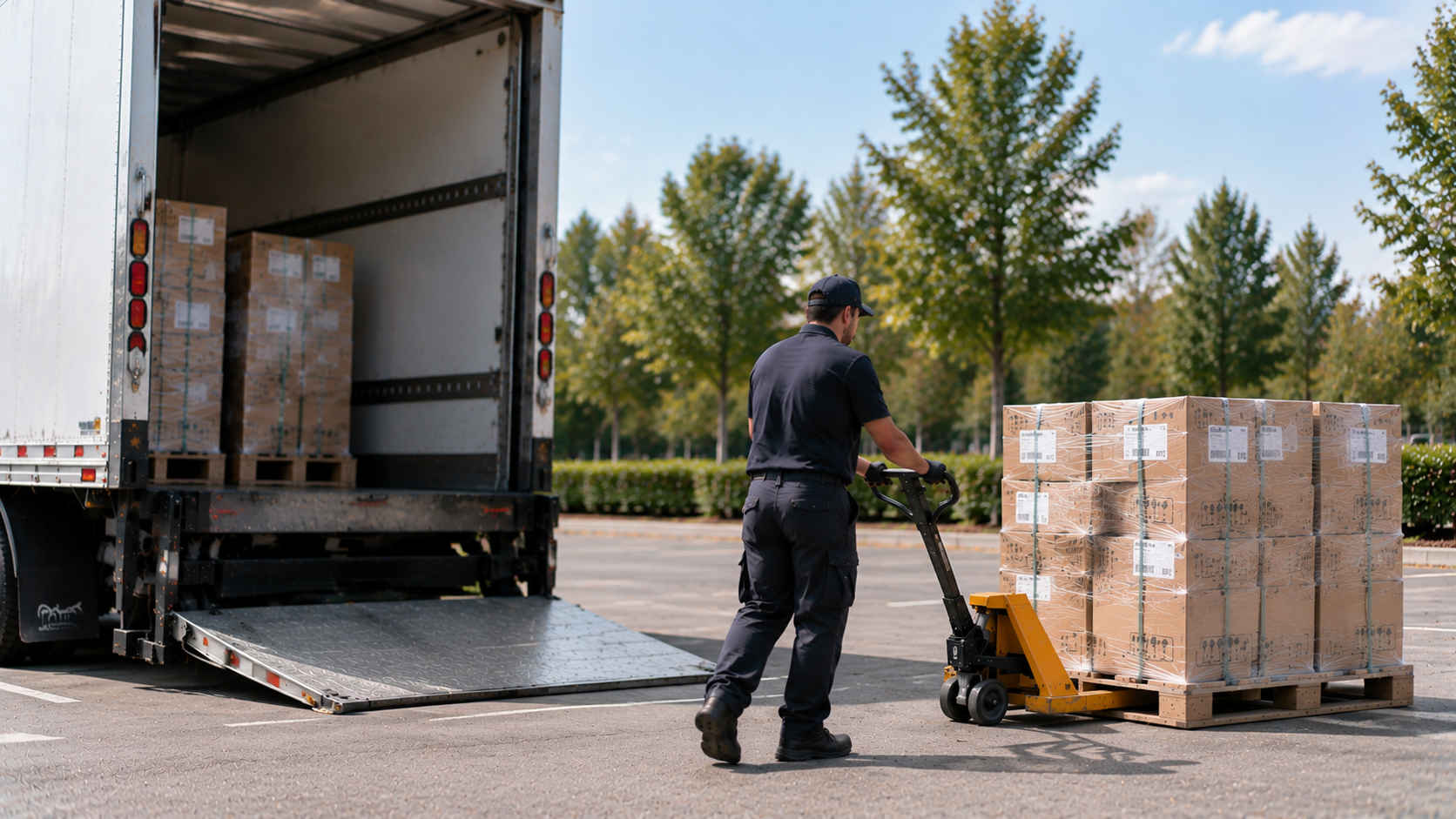
A receiver confirms a business address and opening hours, so the seller books commercial delivery. When the truck arrives, there is no dock or forklift—and no liftgate was requested. The freight cannot be unloaded as planned.
Before booking LTL delivery, verify how the site will receive the shipment, including truck access, unloading equipment, receiving hours, appointment requirements, and an on-site contact.
Confirm Dock Access and Receiving Hours
A company name does not establish that a location can receive palletized freight. Warehouses, storefronts, offices, and home-based businesses have different receiving conditions.
Ask how this shipment will come off the truck. If the receiver plans to use a forklift, confirm that suitable equipment and an operator will be available. If the site uses a dock, check whether the delivery vehicle can access it.
Receiving hours should reflect when staff can accept and unload freight. Include gate procedures, vehicle restrictions, and delivery appointment requirements in the booking information.
Check What Liftgate Delivery Includes
Liftgate delivery lowers freight from the truck to ground level. Movement indoors, across steps, or to an installation position requires separate confirmation.
Ask where the receiver expects the equipment to be placed, then establish who will move it after unloading. This helps align the customer’s expectations with the service being booked.
Provide the packed dimensions and gross weight of each handling unit so the transportation provider can check equipment suitability. Heavy or oversized freight may require a forklift, crane, or another unloading arrangement.
Confirm Carrier Acceptance for Energy Equipment
For energy equipment shipping, confirm whether the carrier accepts the specific product at the destination and can provide the requested delivery services.
Supply an accurate commodity description and applicable dangerous-goods information alongside the cargo specifications. A carrier’s general acceptance of lithium batteries should not be treated as confirmation for every destination or service combination.
If the address, cargo, or unloading requirements change, ask the transportation provider to review the revised arrangement before dispatch.
LTL Delivery Requirements Checklist
Confirm the following information with the receiver and include it in your quote request:
- Destination: Full address, location type, and truck access restrictions.
- Receiving arrangements: Receiving hours, appointment requirements, and gate instructions.
- Contact: On-site contact name and a reachable telephone number.
- Unloading: Suitable dock or forklift availability, or a request for liftgate service.
- Placement: Expected delivery point and responsibility for moving freight after unloading.
- Cargo: Handling-unit count, packaging, packed dimensions, and gross weight for each unit.
- Special requirements: Commodity description, applicable dangerous-goods details, and additional services needed.
Mark unresolved information as pending. Ask the transportation provider to confirm the proposed service scope and identify any remaining requirements before booking.
Coordinate Your U.S. Delivery with VOC
VOC supports LTL and FTL transportation coordination for commercial, residential, and project-site deliveries, including energy equipment shipments.
Our team uses cargo specifications and receiving-site information to coordinate carrier options and clarify requested delivery services.
Request an LTL delivery quote and share your cargo specifications and receiving-site requirements with VOC.
Contact VOC →