
Battery Logistics & Last-Mile Delivery
Lithium Battery Last-Mile Delivery in the U.S.:
The Hidden Challenge
Bringing lithium batteries into the U.S. market is only the first step. The real challenge begins after arrival, when companies need to build a compliant battery logistics and last-mile delivery system that can support customers at scale.
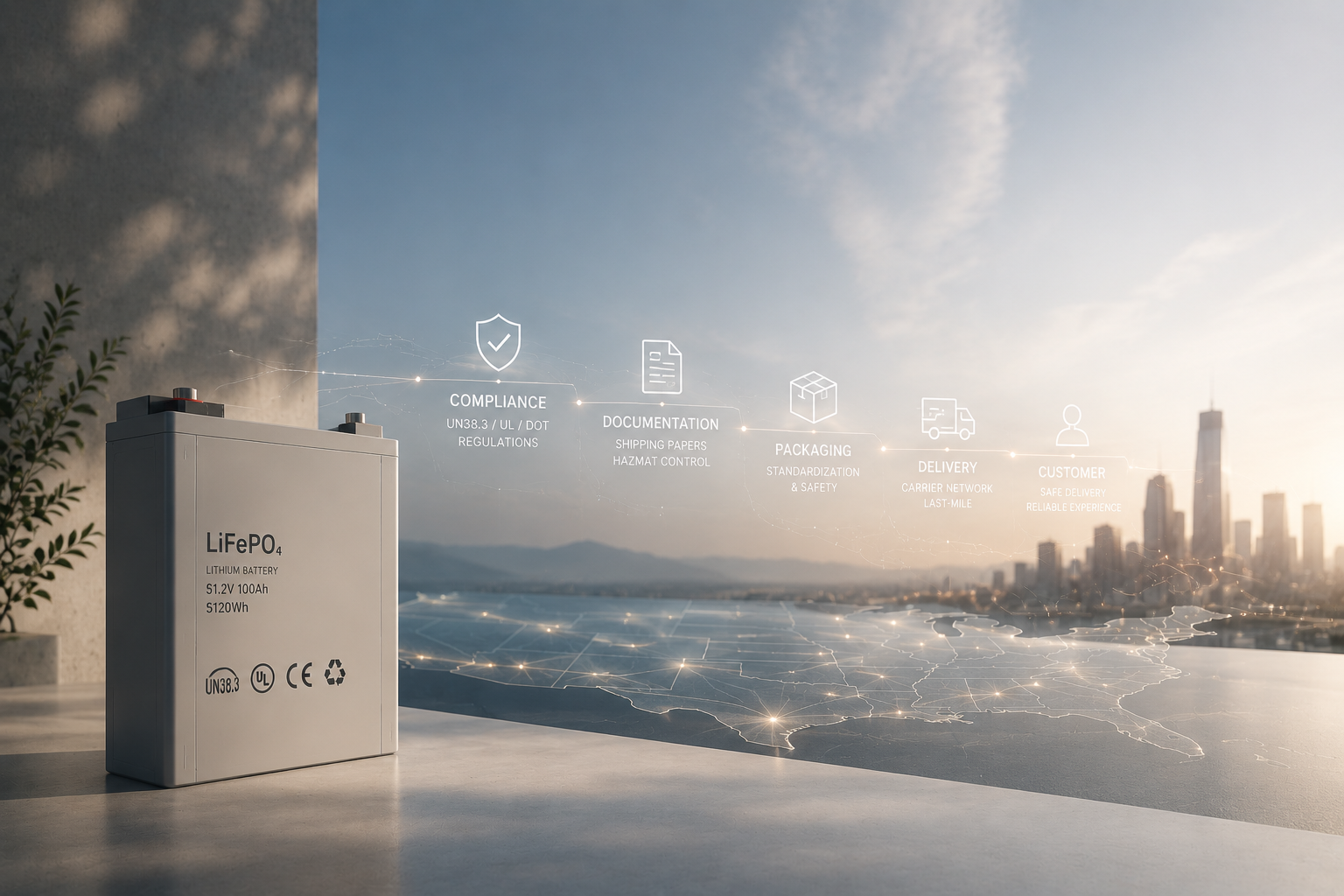
A battery shipment can travel thousands of miles across the ocean, yet the final few miles may create the greatest operational risk.
Last-mile delivery has become one of the most challenging stages of battery logistics in the U.S. market. Success depends not only on transportation capacity, but also on compliance management, local inventory positioning, carrier coordination, and reliable fulfillment execution.
Why Is Battery Last-Mile Delivery Becoming More Complex?
Lithium batteries require greater control throughout the delivery process, from storage and handling to transportation and final delivery.
Different battery categories require different transportation approaches, including standalone batteries, batteries contained in equipment, and large energy storage systems.
At the same time, carriers such as FedEx and UPS have strict requirements for:
- Dangerous goods handling
- Packaging standards
- Shipping documentation
- Operational qualifications
Companies must understand dangerous goods shipping requirements and carrier-specific acceptance standards before selecting transportation channels.
The challenge is no longer simply finding transportation capacity. The real challenge is building a stable, efficient, and compliant local battery delivery system.
Three Delivery Scenarios Require Different Strategies
01. B2C Lithium Battery Delivery: Compliance First
E-commerce battery orders typically involve:
- Small shipments
- Multiple destinations
- Frequent deliveries
Companies must ensure proper product classification, packaging compliance, and carrier requirements before shipment to avoid refusal or returns.
02. B2B Battery Distribution: Reliability First
Retail customers prioritize:
- Delivery consistency
- Inventory availability
- On-time fulfillment
These shipments often require integration between U.S. warehouse inventory, regional delivery networks, and LTL transportation capabilities.
03. Large Battery & Energy Storage Delivery: Specialized Operations First
Large products such as EV batteries and energy storage systems require specialized handling.
Key factors include:
- Pallet securing
- Delivery appointments
- Driver handling
- Route planning
These operational details directly impact delivery safety and efficiency.
New Regulations Are Raising Delivery Requirements
As lithium battery regulations continue to evolve, companies need greater control over battery status management.
Recent updates to lithium battery transportation requirements have increased attention on State of Charge (SOC) management for certain battery shipments.
Companies must manage not only inventory, but also:
- Product condition
- Packaging condition
- Transportation condition
From Transportation to a Complete Battery Logistics System
Solving the battery last-mile challenge requires more than selecting a carrier.
Companies need a complete local battery logistics infrastructure, including:
- Compliant battery warehousing
- Dangerous goods operating procedures
- FedEx / UPS carrier channel management
- Regional LTL delivery networks
- Exception and recovery processes
As lithium battery adoption continues to expand across the U.S. market, companies need more than transportation providers. They need reliable local operations that can support compliance, delivery performance, and customer expectations.
The ability to connect transportation, inventory management, and local execution is becoming a key factor in building successful battery distribution networks.
BUILDING RELIABLE U.S. BATTERY DELIVERY CAPABILITIES
Vast Ocean Corp helps battery companies build reliable U.S. delivery capabilities through:
- Lithium battery compliant warehousing
- Dangerous goods handling procedures
- FedEx / UPS battery shipping support
- Regional LTL delivery coordination
- Local fulfillment and return support
Companies can work with VOC to evaluate solutions based on:
- Battery type and classification
- Shipment volume and delivery frequency
- Customer location requirements
- Transportation channel selection
- Inventory and fulfillment needs
Whether supporting initial U.S. market entry or scaling existing distribution operations, VOC helps battery companies build reliable local delivery capabilities.
Contact VOC →Data Sources & Disclaimer
The information in this article is compiled from publicly available industry resources, carrier guidelines, and regulatory information for industry analysis and educational purposes.
Regulatory requirements may vary depending on battery type, shipment classification, and transportation method.