
Energy Storage Market Insights
Before Scaling Sales: Why Energy Storage Companies Need U.S. Reverse Logistics Capabilities
As battery and energy products expand in the U.S. market, companies need local capabilities beyond product delivery, including returns, repairs, repackaging, and lifecycle support.
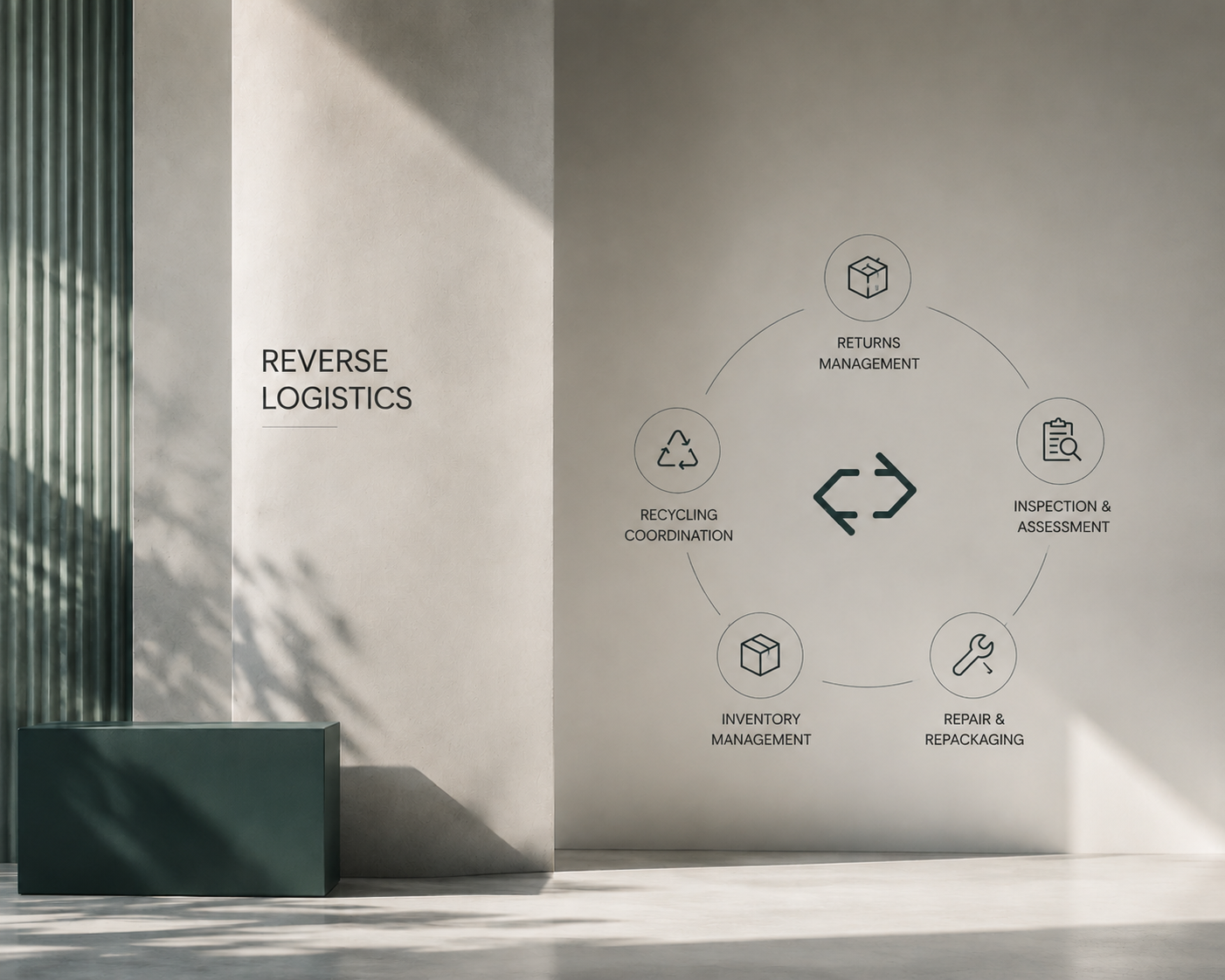
The growth of battery and energy products in the U.S. market is creating new operational challenges beyond product delivery.
According to the American Clean Power Association (ACP) and Wood Mackenzie, U.S. battery storage deployment continues to grow as demand for flexible energy resources and grid reliability solutions increases.
01. SALES GROWTH IS CREATING NEW RETURN MANAGEMENT CHALLENGES
As battery products become more widely deployed in the U.S. market, companies need to prepare for increasing return and service requirements because product delivery is only one part of the customer lifecycle.
Companies also need processes to manage:
- Customer returns
- Warranty requests
- Damaged products
- Service-related cases
Unlike traditional products, battery and energy products require additional evaluation after return, including product condition assessment, handling requirements, and next-step decisions.
These processes may include:Repair,Repackaging,Restocking and Recycling coordination.
Building local return management capabilities helps companies create more efficient processes for handling customer returns and service requirements.
02. BATTERY RETURNS REQUIRE MORE THAN TRANSPORTATION
Battery product returns are more complex than standard returns because companies need to evaluate product condition and determine the appropriate next steps before products can be reused, repaired, or redistributed.
When battery products return from the market, companies may need visibility into:
Product condition, Battery status, Packaging requirements, and Storage conditions.
The return process often involves multiple stages:
Without proper local processing capabilities, returned products may experience longer handling times, higher costs, and reduced product value.
03. LOCAL PROCESSING CAPABILITIES IMPROVE PRODUCT LIFECYCLE MANAGEMENT
As battery deployments increase, companies need more than storage locations. They need local capabilities to evaluate, process, and manage returned and service-related products effectively.
Returned or service-required products may require different handling approaches depending on their condition, including:
- Product inspection
- Repair support
- Repackaging
- Inventory management
- Recycling coordination
By establishing local processing capabilities, companies can reduce unnecessary transportation, improve service response times, and maintain better control over product value.
These capabilities help energy companies maintain better customer support and protect product value after deployment.
04. REVERSE LOGISTICS IS BECOMING PART OF ENERGY SUPPLY CHAIN STRATEGY
As energy products become more widely deployed, reverse logistics will become an increasingly important part of long-term supply chain strategies.
Companies that focus only on product delivery may face new challenges as return volumes, service requirements, and lifecycle management needs increase.
Building reliable reverse logistics capabilities helps energy companies improve customer support, protect product value, and scale operations in global markets.
SUPPORTING U.S. ENERGY PRODUCT LIFECYCLE OPERATIONS
For global battery and energy companies entering the U.S. market, managing returned and service-related products locally is becoming increasingly important.
Vast Ocean Corp supports energy companies through:
- Return coordination
- Product inspection support
- Battery product handling
- Repackaging support
- Inventory management
- Recycling coordination
VOC helps companies build reliable U.S. operational support based on:
- Product category
- Return requirements
- Inventory needs
- Service requirements
- Distribution strategy
Whether managing customer returns, warranty products, or lifecycle requirements, VOC helps energy companies improve operational efficiency and establish reliable U.S. reverse logistics support.
Contact VOC →Data Sources & Disclaimer
The information in this article is based on publicly available industry research, energy market analysis, and supply chain insights for educational and industry discussion purposes.
Market requirements and operational processes may vary depending on product categories, locations, regulatory conditions, and business models.