
Energy Storage Market Insights
BESS Delivery vs. Project Completion: Why the Timing Gap Matters
The time between battery delivery and project completion can create unexpected storage, scheduling, and site coordination challenges.
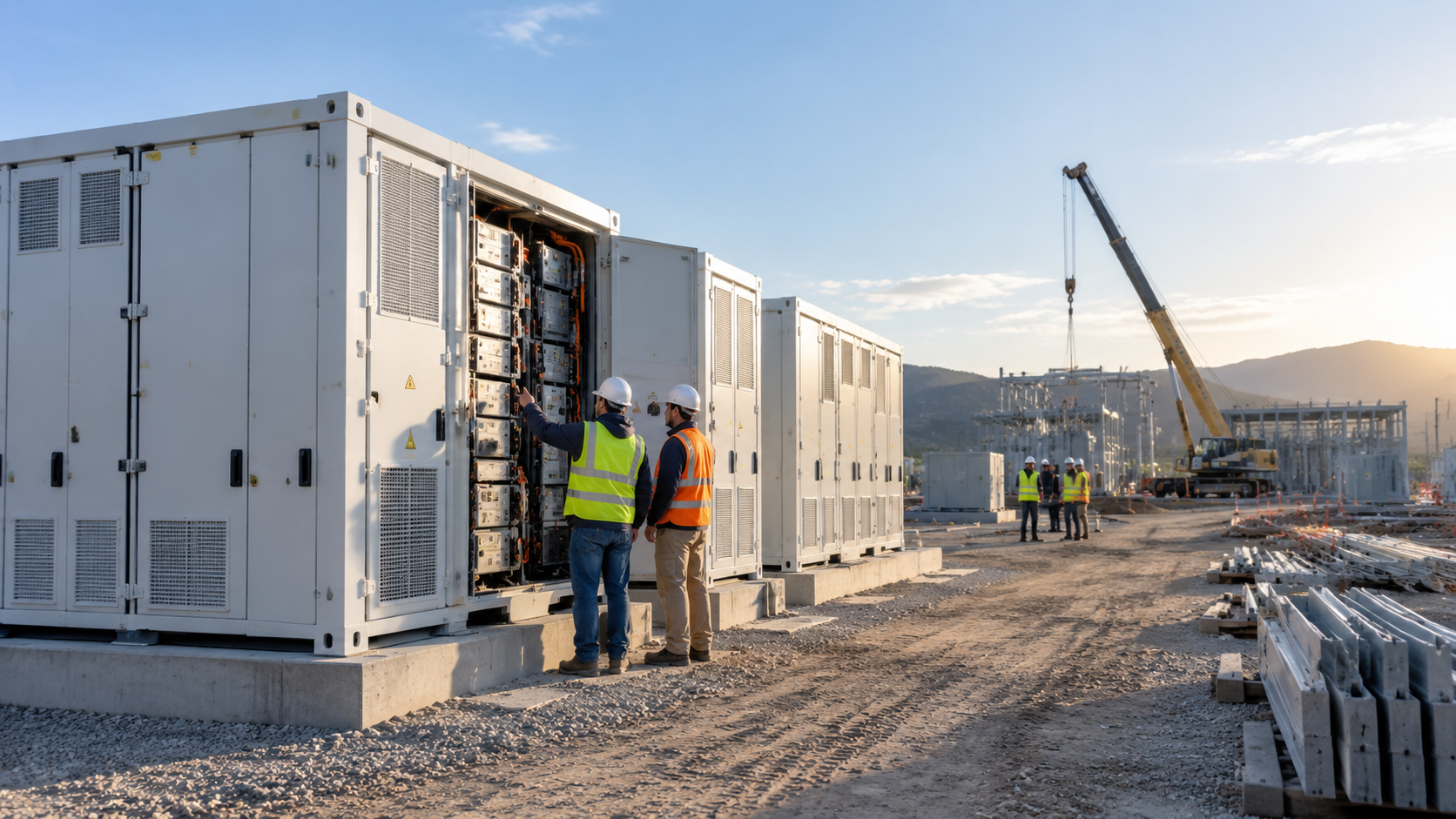
A BESS shipment can arrive exactly on schedule while the project itself is still weeks away from completion. Installation, testing, commissioning, grid connection, or performance verification may still be pending.
That gap matters operationally. Batteries may need to stay in storage longer, deliveries may need to be rescheduled, and suppliers may face additional coordination with EPC contractors and site teams.
01. DELIVERY AND SUBSTANTIAL COMPLETION ARE DIFFERENT MILESTONES
BESS contracts commonly separate equipment delivery from substantial completion.
Delivery Date:when equipment reaches the agreed contractual location
Substantial Completion Date: when the project reaches the contractually defined level of completion
A simplified project sequence may look like:
Equipment Delivery → Installation → Testing → Commissioning → Performance Testing → Substantial Completion
These milestones can carry different deadlines, responsibilities, and delay consequences. For suppliers and logistics teams, physical delivery should therefore be treated as one stage in the project timeline rather than the final completion point.
02. THE GAP BETWEEN DELIVERY AND PROJECT READINESS CREATES LOGISTICS PRESSURE
Once batteries arrive, the project may still be waiting on installation progress, electrical work, grid connection, or other downstream activities.
A project may originally plan for direct delivery from warehouse to site. If installation is delayed, those batteries may suddenly require temporary storage for several additional weeks or need to be delivered in smaller phases.
This can affect storage duration, transportation sequencing, inventory visibility, handling requirements, and site delivery schedules.
The key planning question is not only:
“When will the batteries arrive?”
It is also:
“When will the project actually be ready for them?”
The larger the gap between those two dates, the more important warehouse capacity and delivery coordination become.
03. TESTING AND COMMISSIONING CAN EXTEND THE COMPLETION TIMELINE
Commissioning and performance testing can continue well after equipment delivery, especially when site readiness, grid connection, controls integration, or contractor coordination changes.
That creates a simple but important reality:
Equipment can arrive on time while the project itself remains delayed.
For suppliers and project teams, delays after delivery can extend inventory dwell time, change site delivery sequences, and create additional coordination between battery suppliers, EPC contractors, and project operators.
04. BESS LOGISTICS SHOULD FOLLOW THE FULL PROJECT SCHEDULE
Before scheduling battery delivery, project teams should confirm three things:
- Is the site ready?
- Is storage available if the schedule moves?
- Does the delivery sequence match installation and commissioning plans?
A more complete planning view connects:
Manufacturing → Transportation → Delivery → Installation → Commissioning → Substantial Completion
By aligning logistics with the broader project timeline, companies can better determine when batteries should leave the warehouse, whether temporary storage may be needed, and how deliveries should be phased around site readiness.
The goal is not to deliver equipment as early as possible. It is to deliver it when the next stage of the project is ready.
Frequently Asked Questions
What is the difference between BESS delivery and substantial completion?
Delivery generally refers to the physical handover of equipment at the agreed contractual location. Substantial completion may depend on installation, testing, commissioning, and other project-specific contractual requirements.
Can a BESS project be delayed even if equipment arrives on time?
Yes. Site readiness, installation, grid connection, commissioning, performance testing, or contractor coordination can delay project completion even when equipment delivery is on schedule.
Why does the gap between delivery and project readiness matter for logistics?
If batteries arrive before the project is ready, they may require additional storage, handling, inventory management, or rescheduled transportation.
How should BESS delivery be coordinated with project schedules?
Battery arrival should be aligned with site readiness, installation schedules, commissioning plans, storage availability, and downstream project milestones.
FROM EQUIPMENT DELIVERY TO PROJECT READINESS
For BESS projects, logistics does not end when batteries reach the site.
If a project involves multiple delivery, installation, testing, or commissioning milestones, logistics planning should account for the full project schedule rather than the delivery date alone.
VOC supports battery and energy storage companies with U.S. warehousing, inventory management, transportation coordination, and project delivery support.
Contact VOC →Data Sources & Disclaimer
This article is based on publicly available BESS contracting, procurement, and project delivery guidance for educational and industry discussion purposes.
Key references include:
- U.S. BESS EPC contract analysis and industry contracting guidance
- Publicly available utility-scale energy storage procurement and risk allocation analysis
- Publicly available BESS commissioning and project execution guidance
Contract terms, milestone definitions, testing requirements, warranty obligations, and project schedules vary by agreement and project structure. This article is for general industry discussion and does not constitute legal advice.