
Energy Storage Market Insights
U.S. BLACK MASS REQUIREMENTS ARE CHANGING:WHY BATTERY LIFECYCLE LOGISTICS MATTERS
As battery deployments grow in the U.S. market, new U.S. black mass requirements are reshaping how companies evaluate battery recycling pathways, processing locations, and material flows.
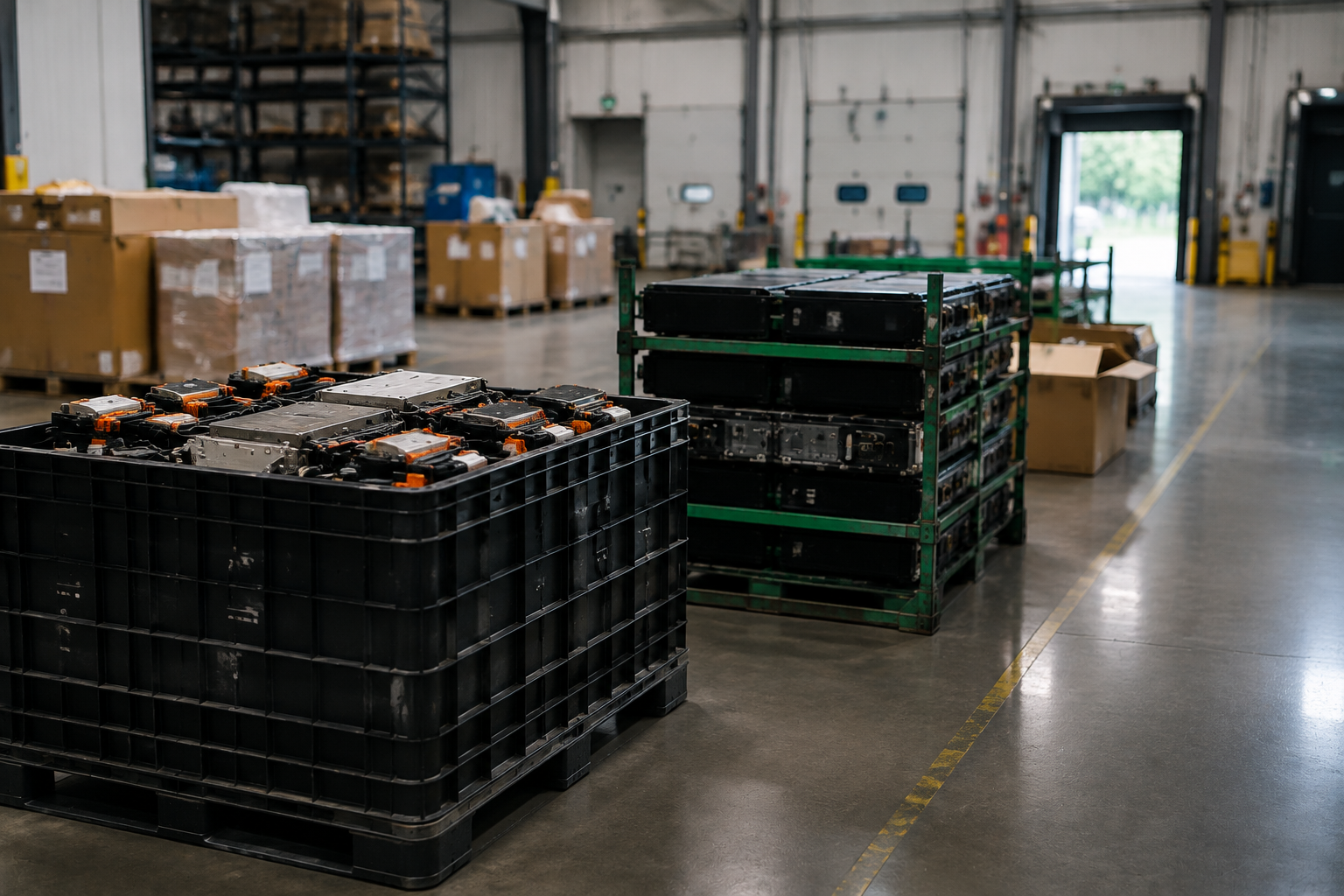
As battery storage systems, electric vehicles, and electronic products continue to expand, the battery supply chain is extending beyond manufacturing and deployment. Companies are increasingly required to understand how batteries move through collection, handling, processing, and recovery pathways after deployment.
In August 2026, the U.S. Bureau of Industry and Security (BIS) issued an interim final rule introducing new requirements related to certain lithium-ion battery black mass, creating new considerations for battery recycling and critical material supply chains.
01. BATTERY RECYCLING SUPPLY CHAINS ARE ENTERING A NEW PHASE
Battery recycling is becoming a critical part of the energy storage supply chain. Traditionally, companies focused mainly on forward supply chains, including manufacturing, transportation, distribution, and customer deployment.
However, as more batteries move into later lifecycle stages, companies need stronger capabilities to manage products after deployment, including:
- Battery collection
- Transportation coordination
- Product evaluation
- Storage management
- Recycling coordination
Among these recycling pathways, black mass has become a key intermediate material produced from processed lithium-ion batteries and plays a role in critical material recovery.
As battery recycling supply chains evolve, companies need better visibility into battery sources, processing locations, and material flows throughout the supply chain.
02. BLACK MASS REQUIREMENTS ARE RESHAPING BATTERY MATERIAL FLOWS
The latest BIS requirements are creating new considerations for companies managing lithium-ion battery black mass supply chains.
Starting August 27, 2026, certain covered lithium-ion battery black mass transactions involving U.S. persons may be subject to requirements related to domestic sales allocation, unless applicable adjustments or exceptions are approved by BIS.
These changes may influence how companies evaluate:
- Battery recycling partners
- Processing locations
- Supply chain structures
- Cross-border material flows
Traditional recycling models often involve collecting used batteries, processing them into black mass, and transferring recovered materials through global supply chains. Companies may need to evaluate more localized recycling pathways, including U.S.-based collection, processing capabilities, and domestic material supply chain connections.
However, these requirements do not apply to all battery recycling materials or transactions. Applicability depends on factors such as material classification, transaction structure, and applicable regulatory requirements.
03. REVERSE LOGISTICS IS BECOMING A KEY PART OF BATTERY LIFECYCLE MANAGEMENT
As battery recycling requirements evolve, battery reverse logistics is becoming an important capability for managing products beyond initial deployment. Battery lifecycle management may involve customer returns or battery recovery, transportation coordination, product inspection and classification, storage management, and recycling or further processing.
To manage these processes effectively, companies need visibility into battery traceability and product information, battery condition, storage requirements, transportation requirements, and final processing pathways.
Without reliable reverse logistics capabilities, companies may face higher handling costs, longer processing times, and limited supply chain visibility.
For battery and energy companies, reverse logistics is becoming an important capability for managing battery products throughout their lifecycle.
04. BUILDING U.S. BATTERY LIFECYCLE CAPABILITIES BEFORE MARKET EXPANSION
As U.S. battery operations expand, companies need to prepare lifecycle support capabilities before scaling their market presence. They need reliable U.S. operational support to manage warranty returns, service requirements, and damaged products after deployment.
Before expanding U.S. market operations, companies should evaluate:
- After-sales strategy
- Local operational support
- Inventory planning
- Service requirements
- Supply chain coordination
Companies that connect forward logistics with reverse logistics will be better positioned to improve customer support, maintain product value, and scale their U.S. market presence.
SUPPORTING U.S. BATTERY LIFECYCLE OPERATIONS
For global battery and energy companies entering the U.S. market, reliable local operational support is becoming increasingly important for managing returns, service requirements, and battery lifecycle activities after deployment.
Vast Ocean Corp supports energy companies through:
- Battery return coordination
- Battery handling and storage support
- Product inspection and condition assessment support
- Repackaging and labeling support
- U.S. warehousing and inventory management
- Transportation coordination
VOC tailors U.S. operational support based on:
- Product category
- Battery condition
- Service requirements
- Inventory needs
- Distribution strategy
Whether managing returned batteries, service-related products, or after-sales operations, VOC helps energy companies improve supply chain visibility, optimize operational efficiency, and build reliable U.S. support capabilities.
Contact VOC →Data Sources & Disclaimer
The information in this article is based on publicly available regulatory updates, industry research, and supply chain analysis for educational and industry discussion purposes.
Key references include:
- U.S. Bureau of Industry and Security (BIS)
- Federal Register – U.S. Government Regulatory Updates
- National Renewable Energy Laboratory (NREL) – Battery Recycling and Energy Storage Research
Regulatory requirements and market access conditions may vary depending on material classification, transaction structure, product type, and applicable U.S. regulations.